RRSP vs. TFSA: Where Should Your Next Investment Dollar Go?
Compare RRSP and TFSA tax benefits, withdrawals and flexibility to decide where your next investment dollar may work best within your financial plan.


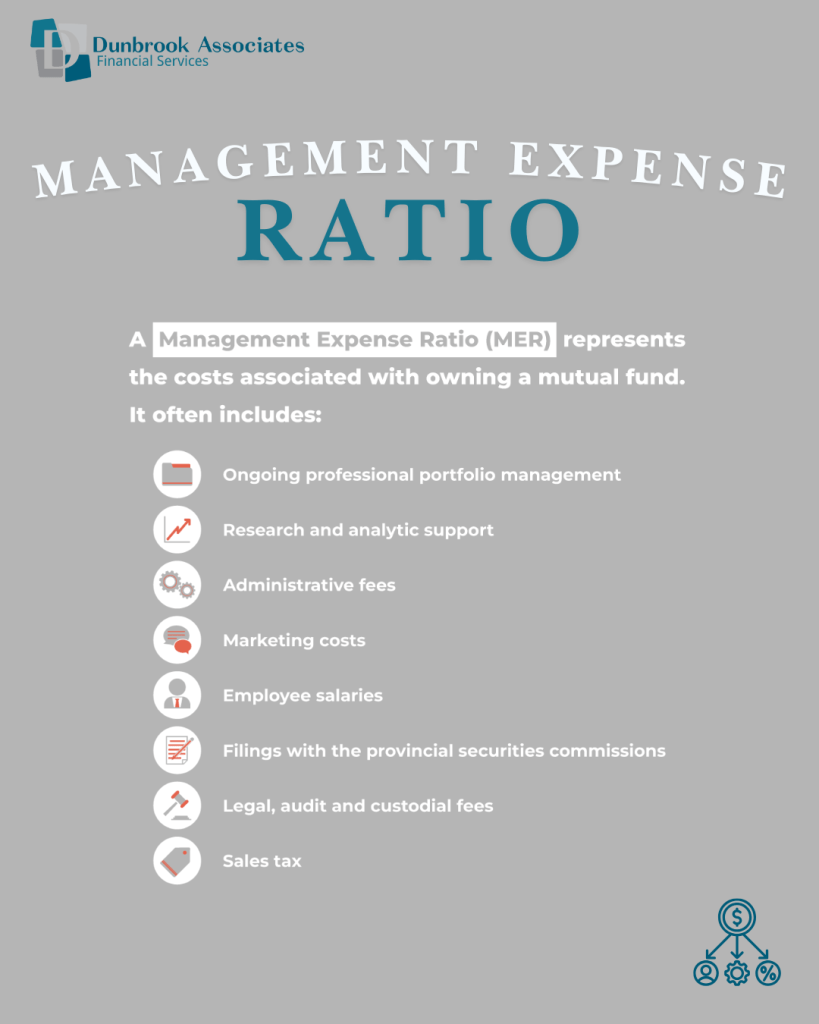
Investing is a cornerstone of building wealth, and understanding the costs associated with investments is crucial for making informed decisions. Among these costs, Management Expense Ratios (MERs) play a pivotal role in determining the overall performance of an investment. This guide will delve into what MERs are, how they impact investments, and why understanding them is vital for achieving your financial goals.
The Management Expense Ratio (MER) represents the annual cost of managing an investment fund, expressed as a percentage of the fund's assets. It is a key metric used to evaluate the cost-efficiency of mutual funds, exchange-traded funds (ETFs), and other managed investment products.
MERs typically include:
For example, if a fund has an MER of 2% and you invest $10,000, you will pay $200 annually in fees, regardless of the fund's performance.
To understand the implications of MERs, it's essential to examine their components in detail:
These are the largest portion of the MER, compensating fund managers for their expertise in selecting and managing investments. Active funds, which require hands-on management, typically have higher management fees than passive funds like index ETFs.
Operating a fund involves various administrative tasks, including maintaining records, regulatory compliance, and shareholder communications. These costs are bundled into the MER.
Some funds charge additional fees based on their performance relative to a benchmark. While not always included in the MER, they can add to the overall cost.
MERs directly impact your investment returns. Over time, even a small percentage difference can significantly affect your portfolio's growth due to the power of compounding. Consider this example:
If both funds earn a gross annual return of 8%, the net return for Fund A will be 6% (8% - 2%), while Fund B will earn 7.5% (8% - 0.5%). Over 20 years, this seemingly small difference can lead to a substantial gap in investment outcomes.
Different investment products have varying MERs, reflecting the level of management and complexity involved:
Mutual funds often have higher MERs due to active management and associated operating costs. The average MER for mutual funds ranges from 1.5% to 2.5%.
ETFs are known for their low costs, with MERs typically between 0.05% and 0.75%. Most ETFs follow a passive strategy, tracking an index rather than relying on active management.
Index funds, like ETFs, have lower MERs, making them attractive for cost-conscious investors seeking broad market exposure.
Offered by insurance companies, segregated funds often have higher MERs (2% to 3%) due to added features like maturity guarantees and estate benefits.
When assessing investment options, MERs should be considered alongside other factors like performance, risk, and your financial goals. Here’s how you can evaluate MERs effectively:
Compare the MERs of funds within the same category. For instance, evaluate mutual funds against other mutual funds or ETFs against ETFs.
Higher MERs may be justified if the fund consistently outperforms its peers or offers unique benefits. However, if similar funds provide comparable returns at a lower cost, it might be wise to switch.
Ensure that a fund’s performance justifies its MER. Look at long-term returns to assess whether the cost aligns with the benefits.
Investors can employ various strategies to reduce the impact of MERs on their portfolios:
Consider low-cost ETFs or index funds, which often have MERs below 0.5%.
Funds with high turnover rates may incur additional trading costs, indirectly affecting returns. Low-turnover funds generally have lower MERs.
A fee-based financial advisor charges a flat fee or percentage of assets rather than commissions, helping you select cost-effective investments.
While higher MERs may indicate active management, they don’t guarantee superior returns. In fact, many high-cost funds underperform their benchmarks after fees.
MERs don’t include trading costs or sales charges like front-end or back-end loads. These additional expenses can further erode returns.
MERs can change over time. It’s essential to review fund documents regularly to stay informed.
MERs should align with your broader financial strategy. For long-term goals like retirement, minimizing fees can have a profound impact on your nest egg. For short-term objectives, prioritizing performance over cost might be more appropriate.
Understanding Management Expense Ratios is crucial for making informed investment decisions. By carefully evaluating MERs and their impact on your portfolio, you can strike a balance between cost and performance, maximizing your returns over time. Always consult with a financial advisor to ensure your investments align with your goals and risk tolerance.
Key Takeaway: Knowledge is power. By being mindful of MERs and their role in investment performance, let Dunbrook Associates help you take a proactive approach to building wealth and achieving financial success.
.jpg)
Compare RRSP and TFSA tax benefits, withdrawals and flexibility to decide where your next investment dollar may work best within your financial plan.

For many Canadian homeowners, a mortgage renewal once felt like a routine piece of paperwork. The lender sent a letter, the borrower reviewed the new rate, and another term began.
.jpg)
For most investors, however, long-term investing offers a more practical path toward meaningful financial goals. Rather than trying to predict the market’s next move, a long-term strategy focuses on building a diversified portfolio, remaining invested through changing conditions, and allowing time and compounding to do much of the work.