Blog Details

Secured vs. Unsecured Debt: What You Need to Know

Blog Main Image
Share
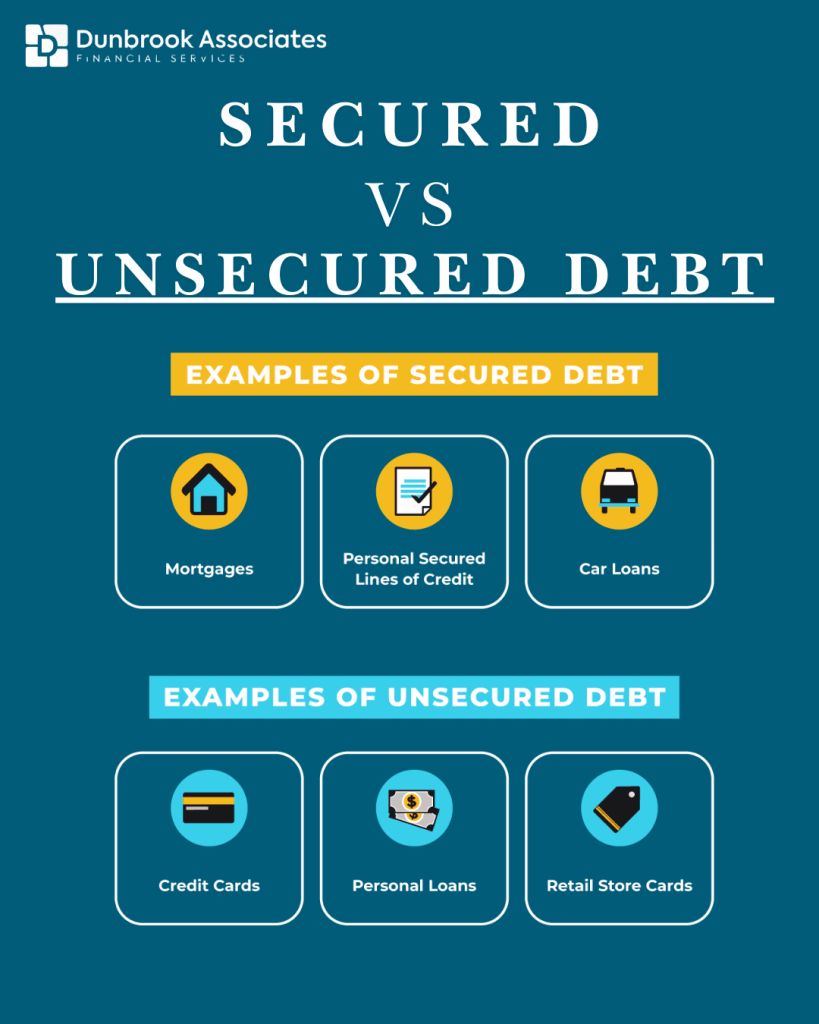
Secured v Unsecured Debt - Dunbrook Associates

Debt is a crucial financial tool that allows individuals and businesses to achieve various financial goals. However, not all debt is created equal. Understanding the difference between secured and unsecured debt is essential for managing your finances wisely, minimizing risk, and making informed borrowing decisions. In this guide, we will explore the key differences, advantages, risks, and best practices for handling both types of debt.

What is Secured Debt?

Secured debt is a loan that is backed by collateral, which is an asset the borrower pledges as security for the loan. If the borrower fails to repay the debt, the lender has the legal right to seize the collateral to recover their losses.

Examples of Secured Debt:

  • Mortgage Loans – The home serves as collateral for the mortgage.
  • Auto Loans – The vehicle secures the loan, and the lender can repossess it if payments are not made.
  • Home Equity Loans & Lines of Credit (HELOCs) – The borrower's home acts as collateral.
  • Secured Credit Cards – A cash deposit is held as security against credit use.
  • Secured Business Loans – Equipment, property, or other assets secure the loan.

Advantages of Secured Debt:

  • Lower Interest Rates – Since lenders take on less risk, secured loans often have lower interest rates than unsecured ones.
  • Higher Borrowing Limits – Lenders are more willing to offer larger loan amounts due to the presence of collateral.
  • Longer Repayment Terms – Many secured loans come with extended repayment periods, making monthly payments more manageable.

Risks of Secured Debt:

  • Risk of Losing Collateral – Failure to repay the loan could result in losing your home, car, or other valuable assets.
  • Potential for Overborrowing – The ability to borrow larger amounts can lead to financial strain if not managed properly.
  • Longer Commitments – Extended repayment terms can mean long-term financial obligations.

What is Unsecured Debt?

Unsecured debt does not require collateral. Instead, lenders approve these loans based on the borrower's creditworthiness, including factors like credit score, income, and debt-to-income ratio. Because unsecured debt presents a greater risk to lenders, it often carries higher interest rates.

Examples of Unsecured Debt:

  • Credit Cards – No collateral is required; interest rates depend on credit history.
  • Personal Loans – Borrowed funds can be used for various purposes, such as home renovations or medical expenses.
  • Student Loans – Typically issued without collateral, but often backed by government guarantees.
  • Medical Bills – Medical expenses are considered unsecured debt unless converted into a secured loan.
  • Lines of Credit – Unlike HELOCs, some personal lines of credit do not require collateral.

Advantages of Unsecured Debt:

  • No Risk of Losing Assets – Since there is no collateral, lenders cannot seize property if you default (although they can take legal action).
  • Faster Approval Process – Unsecured loans are often approved more quickly since no asset valuation is required.
  • More Flexibility – Funds can be used for a variety of purposes without restrictions on collateral.

Risks of Unsecured Debt:

  • Higher Interest Rates – Lenders charge higher interest rates to compensate for the increased risk.
  • Lower Borrowing Limits – Since there is no collateral, loan amounts are typically lower than secured loans.
  • Impact on Credit Score – Late or missed payments can significantly damage your credit rating.

Key Differences Between Secured and Unsecured Debt

Secured debt requires collateral, such as a home or car, while unsecured debt does not. Because secured loans present less risk to lenders, they generally have lower interest rates and higher borrowing limits. In contrast, unsecured loans often come with higher interest rates and lower loan amounts since lenders rely solely on the borrower’s creditworthiness. The approval process for secured loans may take longer due to the need for asset valuation, while unsecured loans are typically approved faster. Another key difference is the risk involved—secured debt poses the risk of losing collateral, while unsecured debt primarily affects the borrower’s credit score if payments are missed.

Choosing Between Secured and Unsecured Debt

When deciding whether to take out secured or unsecured debt, consider the following factors:

1. Your Credit Score

  • A high credit score may qualify you for lower interest rates on unsecured loans.
  • A lower credit score might make secured loans a better option due to reduced risk for the lender.

2. Purpose of the Loan

  • Large, long-term investments (such as buying a home) typically require secured loans.
  • Short-term expenses or smaller purchases (such as vacations or emergency expenses) may be better suited for unsecured loans.

3. Risk Tolerance

  • If you're uncomfortable with the possibility of losing an asset, unsecured debt may be a safer choice.
  • If you need lower interest rates and can manage the risk, secured loans can be advantageous.

4. Repayment Ability

  • Ensure that you can afford monthly payments, especially for secured loans where default could mean losing property.
  • Review the total cost of borrowing, including interest and fees, before making a decision.

Managing Debt Effectively

Whether you have secured or unsecured debt, good financial habits can help you stay on top of repayments and avoid financial distress. Here are some tips:

1. Create a Budget

  • Allocate funds to ensure timely debt payments without compromising other financial obligations.

2. Prioritize High-Interest Debt

  • Pay off high-interest unsecured loans (such as credit cards) first to reduce overall interest costs.

3. Maintain an Emergency Fund

  • Having savings as an emergency fund can prevent reliance on high-interest unsecured debt during emergencies.

4. Refinance or Consolidate Debt

  • Consider refinancing secured loans to lower interest rates.
  • Debt consolidation can simplify payments and potentially lower interest on unsecured debt.

5. Monitor Your Credit Score

  • Timely payments and responsible borrowing will help improve your credit score, giving you access to better loan terms in the future.

Understanding the differences between secured and unsecured debt is key to making informed financial decisions. While secured debt offers lower interest rates and larger loan amounts, it comes with the risk of losing collateral. Unsecured debt provides flexibility but often at a higher cost. By carefully assessing your financial situation, goals, and risk tolerance, you can choose the best type of debt for your needs and manage it effectively to maintain financial stability.

If you need personalized financial guidance, the team at Dunbrook Financial Associates is here to help. Contact us todayto explore debt management strategies that align with your long-term financial goals.

Need Personalized Support?
Our team is committed to clarity, precision, and long-term guidance.