RRSP vs. TFSA: Where Should Your Next Investment Dollar Go?
Compare RRSP and TFSA tax benefits, withdrawals and flexibility to decide where your next investment dollar may work best within your financial plan.


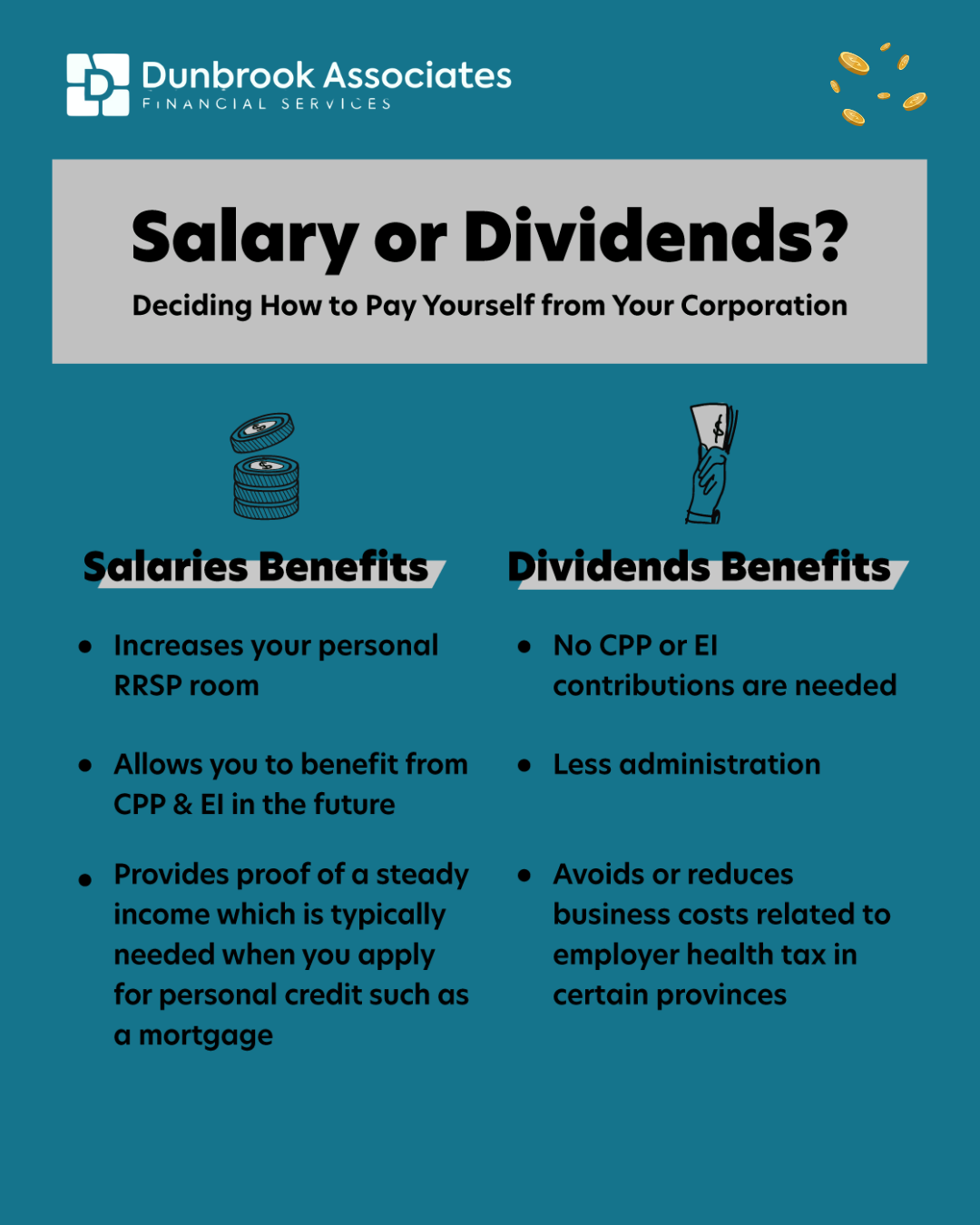
As a business owner or incorporated professional, one of the most crucial financial decisions you’ll face is determining how to pay yourself. Should you take a salary, dividends, or a combination of both? The right choice depends on your financial goals, tax situation, and long-term business strategy. This guide explores the key differences between salary and dividends, their advantages and disadvantages, and how to choose the best option for your circumstances.
Before deciding how to structure your compensation, it’s important to understand how salaries and dividends work within a corporation and the implications on your tax planning.
A salary is a regular paycheck that you receive from your corporation. It is considered earned income and is subject to payroll deductions, including Canada Pension Plan (CPP) contributions, Employment Insurance (EI) (if applicable), and income tax.
Dividends are payments made to shareholders from the corporation’s after-tax profits. They are not considered earned income and are taxed differently from a salary. Since the corporation has already paid corporate tax on its profits, dividends are taxed at a lower rate at the personal level through the dividend tax credit.
Several factors influence whether a salary, dividends, or a mix of both is the best approach for you.
The most significant consideration is tax efficiency.
The tax advantages of dividends depend on the corporate tax rate in your province compared to your personal tax bracket. If your corporation is eligible for the small business deduction (SBD), it pays a lower tax rate on active business income, which can make dividends more attractive.
✔ Generates RRSP contribution room.
✔ Provides stable income for personal financial planning.
✔ Allows CPP contributions for future retirement benefits.
✔ Recognized as earned income for various tax deductions.
✖ Higher personal tax rates.
✖ Requires payroll deductions, increasing administrative workload.
✖ Mandatory CPP contributions increase overall costs.
✔ Tax-efficient due to the dividend tax credit.
✔ Flexible payout structure based on business cash flow.
✔ No CPP contributions required, reducing payroll costs.
✔ Simpler to administer since no payroll deductions are needed.
✖ Does not generate RRSP contribution room.
✖ No CPP contributions, affecting retirement benefits.
✖ Income may be irregular, making budgeting more difficult.
✖ Limited eligibility for certain personal tax deductions.
For many business owners, a combination of salary and dividends provides the best of both worlds. This strategy allows you to:
If you want to build retirement savings, paying yourself a salary of at least $75,000 (2024 RRSP limit threshold) will maximize your RRSP contribution room.
If you prefer not to contribute to CPP, you might take only dividends. However, you should have other retirement savings plans in place.
If your corporation qualifies for the small business deduction, you could pay yourself a lower salary to contribute to CPP and RRSP, then supplement your income with dividends to take advantage of lower tax rates.
Deciding whether to take a salary, dividends, or a mix of both depends on your financial goals, tax situation, and retirement planning strategy. A tailored approach that considers corporate and personal tax implications can help optimize your income while ensuring financial stability. Consult with a financial advisor at Dunbrook Associates about your business planning needs and create a tax-efficient compensation plan that aligns with your business and personal financial goals.
.jpg)
Compare RRSP and TFSA tax benefits, withdrawals and flexibility to decide where your next investment dollar may work best within your financial plan.

For many Canadian homeowners, a mortgage renewal once felt like a routine piece of paperwork. The lender sent a letter, the borrower reviewed the new rate, and another term began.
.jpg)
For most investors, however, long-term investing offers a more practical path toward meaningful financial goals. Rather than trying to predict the market’s next move, a long-term strategy focuses on building a diversified portfolio, remaining invested through changing conditions, and allowing time and compounding to do much of the work.