RRSP vs. TFSA: Where Should Your Next Investment Dollar Go?
Compare RRSP and TFSA tax benefits, withdrawals and flexibility to decide where your next investment dollar may work best within your financial plan.


Investing is a fundamental strategy for growing wealth over time. Whether you're saving for retirement, purchasing a home, or aiming to build financial security, understanding how your investments perform is essential. One critical concept that all investors must understand is the difference between nominal and real returns. These two types of returns can have a significant impact on your long-term financial goals, yet they are often misunderstood. Let's explore these two concepts in detail and explain how they influence investment expectations.
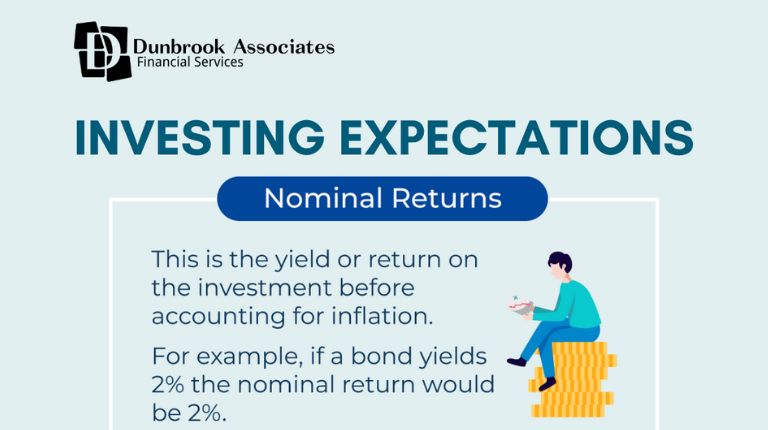
Nominal returns refer to the raw return on an investment, expressed as a percentage. This is the return you see on your investment account, without adjusting for inflation or other economic factors. In other words, nominal returns represent the change in the value of an investment, based solely on its performance, without considering the purchasing power of money.
For example, if you invest $10,000 in a stock and the value grows by 5% over the course of a year, your nominal return would be $500. That’s straightforward: you started with $10,000, and after a 5% increase, you now have $10,500.
While nominal returns are the most direct way to measure an investment’s performance, they don’t necessarily tell the full story about how much you’ve truly gained in real terms. To understand this better, we need to look at the concept of real returns.
Real returns are the returns on an investment that have been adjusted for inflation. In essence, real returns show the actual purchasing power of the money you’ve earned after considering how inflation erodes the value of money over time. The real return gives you a more accurate picture of how much your investment is truly worth in terms of the goods and services you can buy with it.
Using the same example as above, if your stock investment grows by 5% over the year but inflation for that year is 3%, your real return is not 5%. The inflation-adjusted return would be lower, because the increase in your investment's value is partially offset by the loss of purchasing power due to inflation.
So, despite the nominal return of 5%, the real return in this case is only 2%, reflecting the impact of inflation on your investment.
The primary reason why real returns are crucial is because inflation erodes the purchasing power of money. While nominal returns might look appealing on paper, the impact of inflation means that your actual gains may be smaller than expected. For instance, if you earned a nominal return of 7% on your investment, but inflation was 4%, the real return would only be 3%. In this scenario, while you’ve technically made money, you are not as wealthy in real terms.
Inflation affects nearly every aspect of the economy, from groceries to housing to healthcare costs. Over time, a high inflation rate can significantly reduce the value of your investment returns. This is why understanding real returns and staying invested is essential for planning for future needs, such as retirement, where you will need your money to outpace inflation over decades.
When setting investment goals, it is critical to account for inflation. If you're aiming for a 6% annual return on your investments, and inflation is running at 2%, your real return would only be 4%. This can have profound implications for long-term wealth-building. For example, if your goal is to accumulate $1 million for retirement, but inflation is higher than expected, your nominal returns may not be sufficient to meet that goal in terms of purchasing power.
By understanding the difference between nominal and real returns, you can make more informed decisions about asset allocation, risk management, and savings strategies. This enables you to adjust your expectations and ensure that your investments are positioned to meet your long-term financial goals.
Let’s look at some examples of how nominal and real returns play out in real life:
Imagine you invest $10,000 in the stock market, and over the course of a year, the market delivers a nominal return of 8%. On the surface, you might be happy with your $800 gain. However, if inflation during that same year was 3%, your real return would only be $500
In this case, although you had an 8% nominal return, the inflation-adjusted return is closer to 5.00%. This reduction in return is a direct result of the erosion of your purchasing power due to inflation.
Now let’s consider a fixed-income investment such as a bond. Suppose you invest in a bond that yields 3% annually. If inflation is 2%, your real return is only 1%. Even though the bond is generating a positive return, the impact of inflation reduces the actual purchasing power of the interest payments you’re receiving.
If inflation is higher than the return on a fixed-income investment, you could end up with a negative real return. For instance, if the inflation rate rises to 4%, your bond’s 3% return would result in a negative real return of -1%.
Given the significant impact of inflation on real returns, investors need strategies to protect their purchasing power. Some of the most common ways to hedge against inflation include:
One of the most popular options for protecting against inflation is to invest in assets that tend to rise in value as inflation increases. Real estate is a prime example, as property values and rents generally increase with inflation. Stocks, particularly those of companies with strong pricing power, can also offer protection, as businesses often pass on higher costs to consumers through price hikes.
Diversification across various asset classes—stocks, bonds, commodities, and real estate—can also help mitigate the impact of inflation. For example, commodities like gold have traditionally been viewed as a store of value during periods of high inflation. By spreading your investments across different sectors, you can reduce your exposure to inflation's negative effects.
Investing in international markets can also serve as a hedge against domestic inflation. Different countries experience inflation at different rates, so investing in regions with lower inflation can help protect your portfolio’s real returns.
In conclusion, the difference between nominal and real returns is critical for anyone investing to grow their wealth. Nominal returns provide a snapshot of how much money you've earned, while real returns adjust for inflation to give you a more accurate picture of how much your wealth has actually grown in terms of purchasing power.
Understanding this difference helps you set more realistic investment expectations and plan for the future. While nominal returns are useful for tracking performance, real returns are what truly matter when it comes to ensuring that your wealth grows in a way that allows you to maintain your lifestyle and meet your long-term financial goals.
As you build your investment strategy, remember to account for inflation in your planning, aim for diversified portfolios, and consider inflation-protected investments to help your returns keep pace with rising costs.
.jpg)
Compare RRSP and TFSA tax benefits, withdrawals and flexibility to decide where your next investment dollar may work best within your financial plan.

For many Canadian homeowners, a mortgage renewal once felt like a routine piece of paperwork. The lender sent a letter, the borrower reviewed the new rate, and another term began.
.jpg)
For most investors, however, long-term investing offers a more practical path toward meaningful financial goals. Rather than trying to predict the market’s next move, a long-term strategy focuses on building a diversified portfolio, remaining invested through changing conditions, and allowing time and compounding to do much of the work.