RRSP vs. TFSA: Where Should Your Next Investment Dollar Go?
Compare RRSP and TFSA tax benefits, withdrawals and flexibility to decide where your next investment dollar may work best within your financial plan.


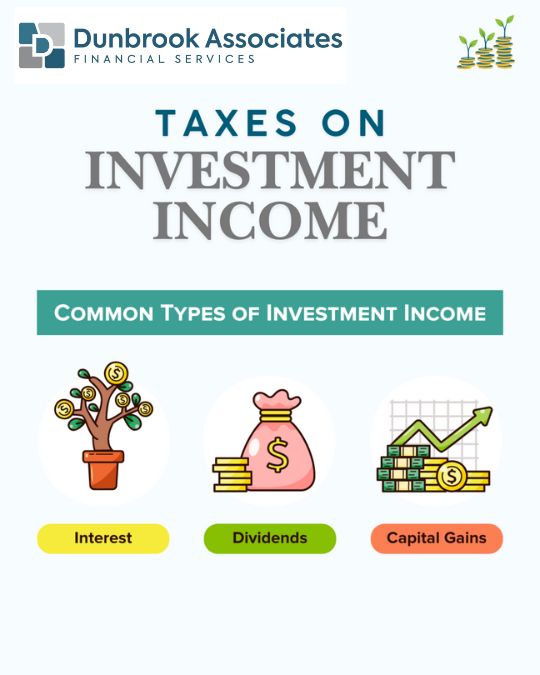
Investing is a powerful way to grow wealth and achieve financial goals. For Canadian investors, understanding the tax implications of investment income is essential to maximizing returns and planning effectively. This comprehensive guide breaks down the key tax rules surrounding investment income in Canada, offering insights into how different types of investments are taxed and strategies to optimize your tax position.
Investment income refers to the earnings generated from your investments. This income can take several forms, including:
Each type of investment income is taxed differently in Canada, which has significant implications for your overall tax strategy.
Interest income is fully taxable at your marginal tax rate. This means that if you’re in a higher tax bracket, a significant portion of your interest earnings could go toward taxes. Common sources of interest income include:
Tax Tip: To minimize the tax burden on interest income, consider holding interest-earning investments in a registered account such as a Tax-Free Savings Account (TFSA) or a Registered Retirement Savings Plan (RRSP).
Dividend income is taxed more favorably than interest income, thanks to the Dividend Tax Credit (DTC). Dividends paid by Canadian corporations are eligible for this credit, which reduces the overall tax liability. There are two types of dividends:
Example: If you earn $1,000 in eligible dividends, the gross-up rate (currently 38%) increases the taxable amount to $1,380. However, the DTC helps offset this higher taxable income, resulting in a lower effective tax rate compared to interest income.
Tax Tip: Consider investing in Canadian dividend-paying stocks within non-registered accounts to take advantage of the DTC.
Capital gains occur when you sell an investment for more than its original cost. Unlike interest income, only 50% of capital gains are taxable. This 50% inclusion rate makes capital gains one of the most tax-efficient forms of investment income. The Canadian Government is currently introducing legislation that would increase the inclusion amount to 66.7% for capital gains exceeding $250,000.
Example: If you sell shares for a profit of $10,000, only $5,000 is subject to tax at your marginal rate.
Capital Losses: If you sell an investment at a loss, you can use the capital loss to offset capital gains in the same tax year. Unused losses can be carried back three years or forward indefinitely.
Tax Tip: Timing is crucial when realizing capital gains. Consider deferring the sale of profitable investments to a year when your income is lower to reduce the tax impact.
Investing in foreign assets can diversify your portfolio, but it also comes with unique tax considerations. Foreign investment income is generally subject to withholding taxes in the country of origin. For example, U.S. dividends are typically subject to a 15% withholding tax.
Canadian Tax Implications:
Tax Tip: Hold U.S. dividend-paying stocks in an RRSP to avoid U.S. withholding taxes, as these accounts are exempt under the Canada-U.S. Tax Treaty.
Income from rental properties is taxable as regular income. You can, however, deduct expenses related to the property, such as:
Capital Cost Allowance (CCA): You can claim depreciation on the property to reduce taxable income. However, be cautious, as claiming CCA reduces the property's adjusted cost base, potentially leading to higher capital gains when you sell.
Tax Tip: Maintain detailed records of all expenses and income related to your rental property to maximize deductions.
Registered accounts like TFSAs and RRSPs offer tax advantages that can significantly enhance your investment strategy.
Tax Tip: Maximize contributions to both accounts to reduce current and future tax liabilities.
Mutual funds and Exchange-Traded Funds (ETFs) can generate multiple types of investment income, including interest, dividends, and capital gains. These earnings are passed on to investors and are taxable even if you reinvest them.
Distributions:
Tax Tip: Consider tax-efficient ETFs or mutual funds designed to minimize distributions, particularly for non-registered accounts.
Income splitting involves transferring income to a family member in a lower tax bracket to reduce the overall family tax burden. This strategy can be applied using:
Tax Tip: Work with a financial advisor to structure income-splitting strategies effectively and in compliance with CRA rules.
Accurate reporting of investment income is critical to avoid penalties. Key points to remember include:
Deadlines:
Navigating the tax rules for investment income in Canada can be complex, but understanding the fundamentals can help you make informed decisions and optimize your portfolio. By leveraging tax-efficient accounts, planning for capital gains, and utilizing strategies like income splitting, you can minimize your tax burden and maximize your returns.
Consider working with a financial advisor or tax professional to tailor a strategy that aligns with your financial goals and circumstances. At Dunbrook Associates, we’re here to guide you through the intricacies of investment income and taxation, ensuring you’re well-equipped to achieve financial success.
.jpg)
Compare RRSP and TFSA tax benefits, withdrawals and flexibility to decide where your next investment dollar may work best within your financial plan.

For many Canadian homeowners, a mortgage renewal once felt like a routine piece of paperwork. The lender sent a letter, the borrower reviewed the new rate, and another term began.
.jpg)
For most investors, however, long-term investing offers a more practical path toward meaningful financial goals. Rather than trying to predict the market’s next move, a long-term strategy focuses on building a diversified portfolio, remaining invested through changing conditions, and allowing time and compounding to do much of the work.